
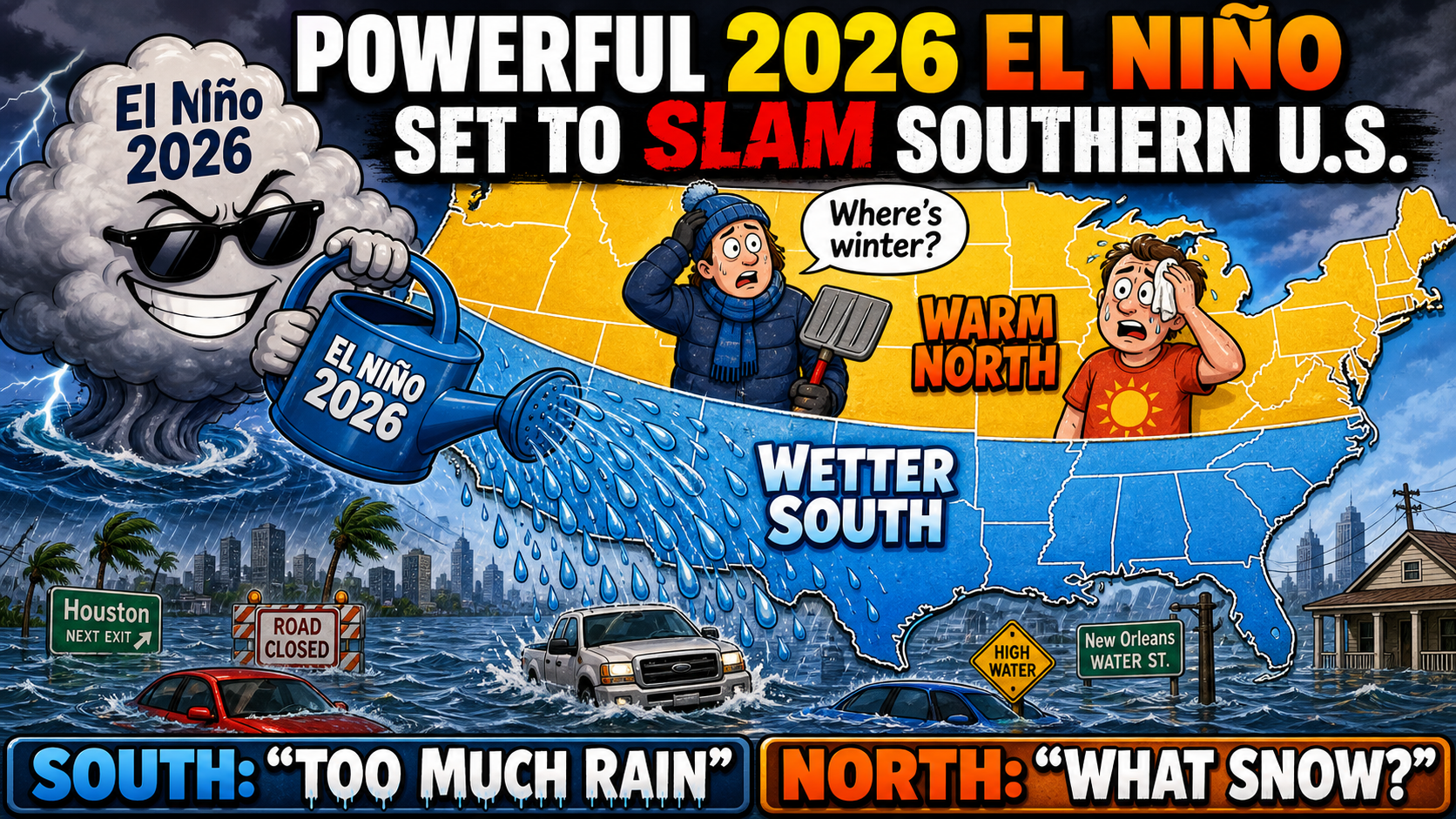
POWERFUL 2026 EL Niño SET TO RESHAPE U.S. WEATHER FROM COAST TO COAST;
What’s El Niño Bringing To Your Neighborhood?
A powerful El Niño is emerging in the Pacific Ocean and is expected to significantly shape U.S. weather through late 2026 and into winter 2026–27.
NOAA’s Climate Prediction Center and the World Meteorological Organization estimate an 80–90% chance the event will fully develop by late summer, with atmospheric changes already beginning.
El Niño occurs when unusually warm water spreads across the equatorial Pacific, disrupting global wind patterns and shifting the jet stream, the high-altitude current that steers storms. This shift typically brings wetter conditions across the southern United States and warmer, often drier weather across northern regions.
The most pronounced effects are expected across the southern tier, from California to the Carolinas. A stronger subtropical jet stream is likely to deliver frequent storm systems across the Southwest, Gulf Coast, and Southeast during late fall and winter.
For Southern California and Arizona, this could mean sustained periods of rainfall rather than the usual short bursts, increasing the risk of flash flooding, mudslides, and pressure on drainage infrastructure. Farther east, the Gulf Coast and Florida Panhandle are also expected to see wetter-than-normal conditions, with a higher likelihood of river flooding and urban flood events.
In contrast, the Pacific Northwest and parts of the northern interior West are expected to be drier than average, with reduced mountain snowpack. This can leave soils and forests drier heading into spring and summer 2027, raising the risk of wildfires if higher temperatures follow.
Across the northern Plains, Great Lakes, and parts of the Northeast, El Niño typically brings milder winter temperatures and less snowfall. While that may lower heating demand and reduce major snowstorms, it can also limit snowpack and spring runoff, affecting water supplies and ecosystems.
El Niño also influences the Atlantic hurricane season. Increased wind shear in the atmosphere tends to suppress storm formation, so 2026 may see fewer hurricanes compared to recent years. However, forecasters caution that even a single landfalling storm can still cause severe damage.
Scientists emphasize that El Niño does not determine specific weather events but instead shifts the odds toward certain broad patterns. With the likelihood of a strong event increasing, officials are urging communities, utilities, and businesses to prepare for flooding, drought, wildfire risk, and other weather extremes ahead of winter.


































You must be registered and logged in to comment,
Click to Login or Register and Comment
Great story!
Testing again.
Do you like it?
You know it!